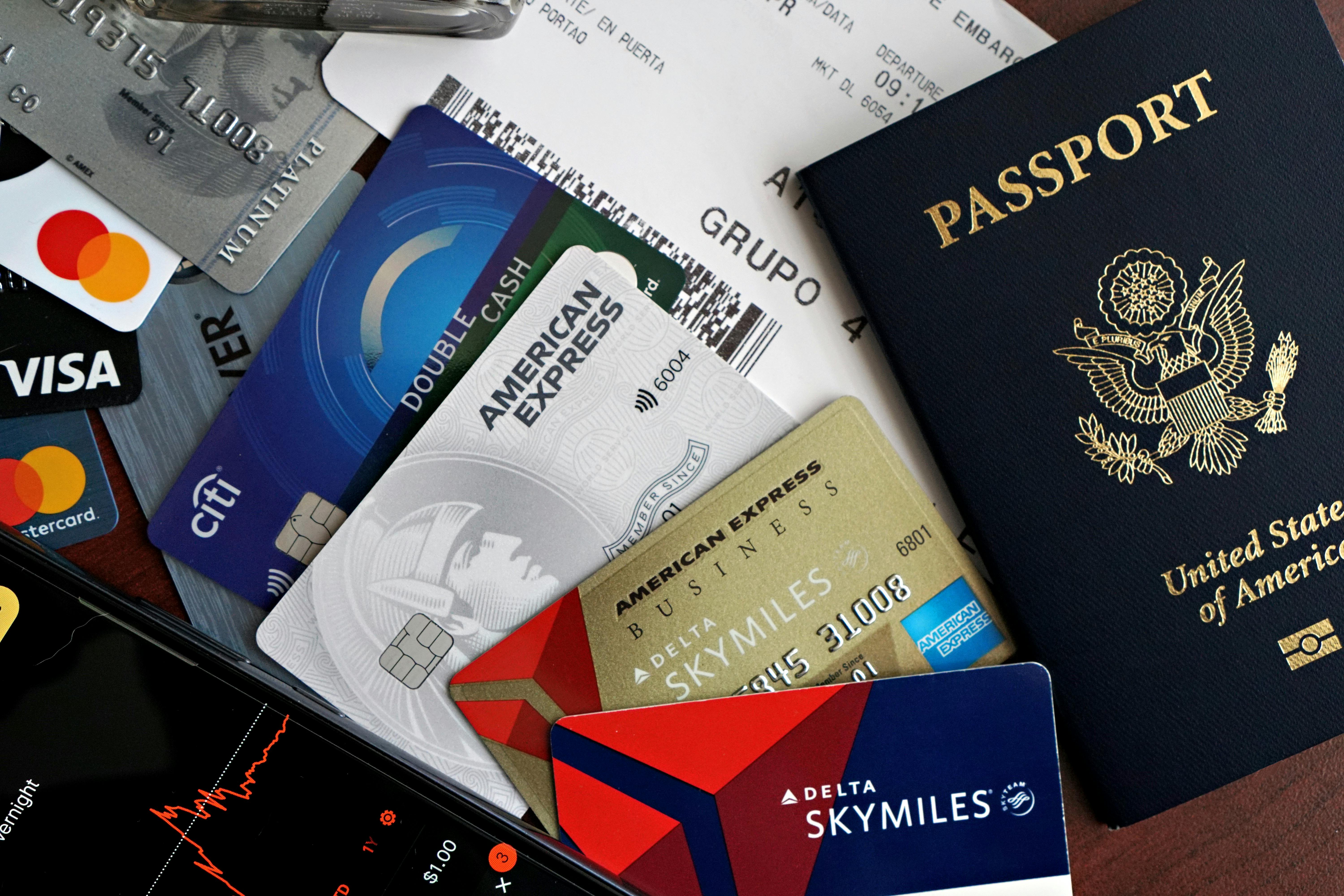
I'm going to make a bold claim: if you carry more than one credit card and use the same one for everything, you're probably leaving $400–$800 on the table every year.
Not because you have bad cards. Because you're using good cards in the wrong places.
Let me show you the math.
The setup
For this analysis, I used a realistic dual-income household spending profile:
| Category | Monthly Spend | Annual Spend |
|---|---|---|
| Groceries | $700 | $8,400 |
| Dining & delivery | $250 | $3,000 |
| Gas | $200 | $2,400 |
| Amazon & online shopping | $300 | $3,600 |
| Total | $1,450 | $17,400 |
These aren't outlier numbers — they're close to Bureau of Labor Statistics averages for a two-adult household.
The baseline I'm comparing against: a flat 1.5% cash back card. Plenty of people still use this as their daily driver, even when they have category-specific cards sitting in the same wallet.
Category 1: Groceries
Using 1.5% flat: $126/year
Best card: Amex Blue Cash Preferred — 6% at US supermarkets → $504/year
Gap: $378/year
The Amex BCP has a $95 annual fee. At $700/month in grocery spend, the rewards cover the fee in about six weeks — and keep earning for the remaining 46.
No-fee alternative: the Amex Blue Cash Everyday earns 3% at US supermarkets. Still $126 more per year than your flat 1.5% card.
Category 2: Dining & Delivery
Using 1.5% flat: $45/year
Best card: Amex Gold — 4x Membership Rewards on restaurants + delivery apps → ~$240/year*
Estimated at 2 cents per point transferred to an airline partner (Air Canada Aeroplan, Avianca LifeMiles, Air France/KLM).
Gap: $195/year
The 2cpp valuation is conservative. Transferring to the right program for the right redemption can yield 2.5–3cpp. But even at a flat 2cpp, the gap is meaningful.
Prefer cash back? The Chase Sapphire Preferred earns 3x on dining and transfers to United, Hyatt, and Southwest — still considerably more than 1.5% flat.

Category 3: Gas
Using 1.5% flat: $36/year
Best card: Citi Custom Cash — 5% on your top eligible spend category → $120/year
Gap: $84/year
The Citi Custom Cash earns 5% on up to $500/month in your highest eligible category. Gas, groceries, dining, and travel all qualify. No annual fee. It's one of the most underrated no-fee cards on the market.
Honorable mention: the Chase Freedom Flex offers 5% on rotating quarterly categories that regularly include gas stations. But it requires activation each quarter and category awareness — which is the exact problem this post is about.
Category 4: Amazon & Online Shopping
Using 1.5% flat: $54/year
Best card: Amazon Prime Visa — 5% at Amazon.com with Prime → $180/year
Gap: $126/year
This one is almost a no-brainer if you already pay for Prime. The Amazon Prime Visa has no annual fee beyond what you're paying for Prime, and earns 5% back on everything you buy through Amazon.
The Amex Gold also earns 4x at Amazon (classified as an online retailer) — worth noting if you're already in the Membership Rewards ecosystem and want to consolidate.
The full picture
| Category | Using 1.5% Flat | Using Best Card | Annual Gap |
|---|---|---|---|
| Groceries ($8,400/yr) | $126 | $504 | $378 |
| Dining ($3,000/yr) | $45 | $240 | $195 |
| Gas ($2,400/yr) | $36 | $120 | $84 |
| Amazon ($3,600/yr) | $54 | $180 | $126 |
| Total | $261 | $1,044 | $783 |
$783 per year. On the same purchases. Without spending a single dollar more.
That's a conservative estimate. It doesn't factor in travel spend, streaming credits, hotel benefits, or the signup bonuses that come with most of these cards.
"But I don't want to manage five different cards"
Fair. You don't have to.
The real insight here isn't "get every card on this list." It's that two well-chosen cards close most of the gap.
A practical two-card setup that covers all four categories:
- Amex Gold — 4x on groceries (at US supermarkets), 4x on dining and delivery. One card for food, everywhere.
- Amazon Prime Visa — 5% on Amazon, 2% at restaurants and gas stations, 1% everywhere else. The catch-all for everything else.
With just these two cards, you go from earning $261/year on $17,400 of spend to roughly $900/year. No quarterly activations. No spreadsheets. No annual fee on the Amazon card.
The actual problem
The numbers above assume you know which card earns the most for each purchase — and that you remember to use it while standing at the checkout.
Most people don't. Not because they're careless, but because:
- Rewards structures change quarterly on rotating category cards
- "Supermarkets" at Amex and "grocery stores" at Chase aren't always the same merchants
- You have about three seconds at checkout to make the call
- Benefits expire, statement credits go unclaimed, and point values shift silently
The information to make the right decision exists. It's just never in front of you at the right moment.
That's the problem Acardai is built to solve. You add the cards you already have, and the AI tells you which one to use for any purchase — instantly, correctly, every time. No memorization. No spreadsheet.
The cards you need probably already exist in your wallet. You just need to know which one to reach for.
Join the waitlist at acardai.com →
Questions or want to share your setup? Reach us on LinkedIn or at [email protected].
Want to stop leaving rewards on the table?
Join the waitlist for early access to Acardai.
Join the Waitlist